
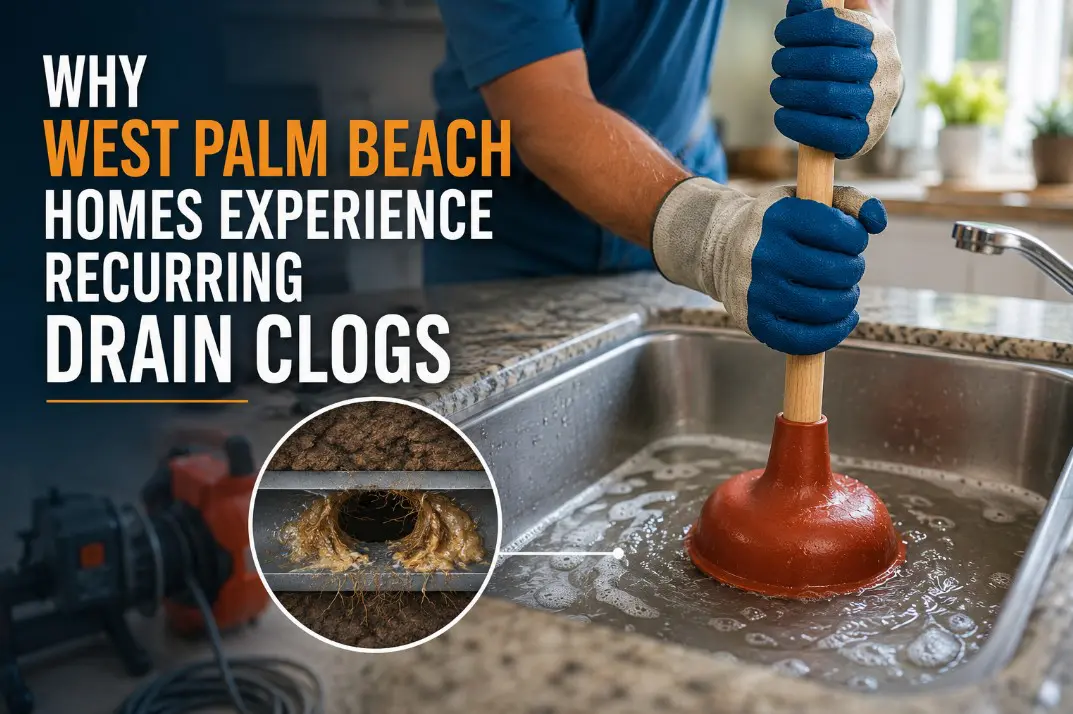
Why West Palm Beach Homes Experience Recurring Drain Clogs
Recurring drain clogs are more than a minor inconvenience for West Palm Beach homeowners. When the same kitchen sink, shower, bathtub, or toilet keeps backing up, it often means there is an underlying problem somewhere inside the plumbing system. While a simple clog may be caused by hair or food debris, repeated blockages can result from grease buildup, aging pipes, tree root intrusion, damaged drain lines, or obstructions located deeper underground.
Understanding why drain clogs keep returning can help homeowners address the actual cause instead of relying on temporary solutions. In many cases, early attention can also prevent wastewater backups, plumbing damage, and more expensive repairs.
Buildup Inside Drain Pipes Is a Common Cause
One of the most common reasons for recurring drain clogs in West Palm Beach homes is gradual buildup inside the pipes. Kitchen drains regularly handle grease, cooking oils, food particles, soap residue, and other debris.
Grease is particularly problematic. It may enter the drain as a warm liquid, but as it cools, it can stick to the interior walls of the pipe. Food particles and other debris then attach to the greasy surface, slowly reducing the amount of space available for water to flow.
Bathroom drains experience a similar process. Hair, soap scum, toothpaste, shaving products, and personal care products can accumulate inside sink, shower, and bathtub drains.
Removing material near the drain opening may restore water flow temporarily, but buildup farther inside the line can remain. When slow drainage or backups repeatedly return, professional Drain Cleaning in West Palm Beach can help remove deeper obstructions and restore proper drainage.
Aging or Damaged Pipes Can Create Recurring Clogs
Not every recurring clog is caused by something homeowners put down their drains. Sometimes the condition of the plumbing itself is responsible.
Older drain lines may develop corrosion, cracks, rough interior surfaces, weakened joints, or misaligned sections. These damaged areas create places where grease, hair, waste, and other debris can easily become trapped.
This can create a repeating cycle. A plumber or homeowner clears the immediate blockage, water begins flowing again, and then debris gradually collects around the same damaged section until another clog develops.
Homeowners may notice that the same fixture repeatedly drains slowly or becomes blocked. Gurgling sounds, unpleasant odors, or recurring wastewater backups can also indicate a deeper pipe problem.
If a damaged section of plumbing is responsible for repeated blockages, professional Drain Repair in West Palm Beach may provide a more permanent solution than repeatedly clearing individual clogs.
Tree Roots Can Invade Underground Drain Lines
West Palm Beach’s warm South Florida climate supports year-round growth for many trees and landscaping plants. While mature vegetation can improve the appearance of a property, underground root systems can sometimes create serious drainage problems.
Tree roots naturally grow toward moisture. If an underground drain or sewer line develops a small crack, loose joint, or weakened connection, roots may begin growing toward the moisture escaping from the pipe.
Once roots enter the plumbing line, they can continue expanding. Toilet paper, waste, grease, and other materials can become trapped around the roots, gradually restricting wastewater flow.
At first, homeowners may notice only occasional slow drainage. As the root system expands, however, clogs and backups may become increasingly frequent.
Clearing the immediate blockage might temporarily restore drainage, but the problem can return if the root intrusion and underlying pipe damage are not addressed.
The Actual Blockage May Be Deeper Than Expected
A slow kitchen sink does not necessarily mean the clog is located directly underneath the sink. Residential plumbing systems contain multiple branch lines that eventually connect to larger drain and sewer pipes.
When one of these deeper lines becomes restricted, symptoms may appear throughout different areas of the home.
For example, flushing a toilet might cause water to rise in a bathtub. A toilet may bubble or gurgle when another fixture drains. Several sinks or showers might also begin draining slowly at approximately the same time.
These symptoms can indicate that the obstruction is located farther inside the drainage system.
When the exact cause of a recurring blockage cannot be identified from the surface, a professional Camera Inspection in West Palm Beach can help examine the inside of the plumbing line. A camera inspection can reveal heavy buildup, tree roots, damaged sections, foreign objects, or other conditions contributing to repeated clogs.
Everyday Household Habits Can Make Clogs Return
Recurring drain problems can also be connected to everyday household habits.
Pouring cooking grease or oil into kitchen sinks is a common cause of buildup. Coffee grounds, food scraps, and other kitchen waste can combine with grease and gradually restrict the pipe.
Bathroom plumbing faces different challenges. Hair and soap residue commonly accumulate in shower and bathtub drains, while toilets can become clogged when wipes, paper towels, hygiene products, or other inappropriate materials are flushed.
Even products labeled as “flushable” may not break apart as quickly as ordinary toilet paper.
Using drain strainers, disposing of cooking grease properly, and being careful about what enters toilets and sinks can reduce the likelihood of recurring blockages.
Why Chemical Drain Cleaners May Only Provide Temporary Relief
Many homeowners turn to store-bought chemical drain cleaners when a sink or shower begins draining slowly. While these products may sometimes open a small pathway through an obstruction, they do not necessarily remove everything causing the blockage.
Grease, sludge, roots, or other material may remain inside the pipe. New debris can then collect around the existing obstruction, causing the drain to become blocked again.
Chemical cleaners also cannot correct cracked pipes, root intrusion, misaligned plumbing, or other structural problems.
If a drain repeatedly requires chemical treatment, identifying the underlying cause is generally more effective than continuing to treat each blockage as an isolated problem.
Warning Signs of a More Serious Drain Problem
An occasional minor clog does not always indicate a major plumbing issue. However, recurring patterns should receive closer attention.
Homeowners should watch for drains that repeatedly become blocked, multiple fixtures draining slowly at the same time, toilets that frequently gurgle, persistent sewage odors, or wastewater backing up into showers and bathtubs.
A sudden change in several drains can be particularly important because it may indicate a restriction within a larger drain or sewer line.
Addressing these warning signs early can help prevent a partial obstruction from developing into a complete blockage or wastewater backup.
Preventing Recurring Drain Clogs in West Palm Beach
Preventing recurring clogs begins with keeping problematic materials out of the plumbing system. Cooking grease and oil should be disposed of separately rather than poured into kitchen sinks. Drain strainers can help capture food particles and hair before they enter the pipes, while toilets should only be used for appropriate waste and toilet paper.
Homeowners should also pay attention to gradual changes in drainage speed. A sink or shower that becomes slower over several weeks may be showing early signs of buildup.
Most importantly, a drain that repeatedly clogs should not be ignored simply because it can be temporarily reopened.
Legacy Plumbing Experts serves homeowners throughout West Palm Beach with professional plumbing and drain services. Determining whether a recurring clog is caused by ordinary buildup, damaged piping, tree root intrusion, or a deeper obstruction makes it possible to choose the appropriate solution.
Addressing the source of recurring drain clogs early can help keep wastewater moving properly, reduce unexpected backups, and protect the home’s plumbing system over the long term.
Tags: