
How Plumbers Track Down Hidden Leaks in Walls and Floors
A stain appears near the baseboard, but the sink cabinet on the other side of the wall is dry. A few days later, the flooring starts to lift. The stain tells you where the water surfaced. Finding where it escaped can take more investigation because water can travel along framing, under flooring, or across a concrete slab.
Professional plumbers find hidden leaks by looking at when the moisture appears, testing the plumbing, and using equipment to narrow down the source. For homeowners in West Palm Beach and throughout Palm Beach County, knowing how that process works can help you understand why a plumber might test a shower, check a supply line, or inspect the room next door before opening the wall.
The First Clue Is When the Moisture Appears
A plumber typically starts by asking when you first noticed the problem and whether it gets worse after anything specific. A ceiling stain that darkens after someone showers upstairs may point to a leaking drain connection, shower valve, or enclosure. Moisture that keeps spreading while fixtures are off may suggest a pressurized supply line. A stain that appears after heavy rain can also prompt a check for water entering from outside.
The plumber may inspect accessible connections and run nearby fixtures individually to see whether the problem can be reproduced. If you’re still gathering clues, our guide to hidden water leak warning signs covers what to look for around your home.
Tools Plumbers Use to Find Leaks Behind Walls and Floors
Moisture Meters Help Trace Damp Areas
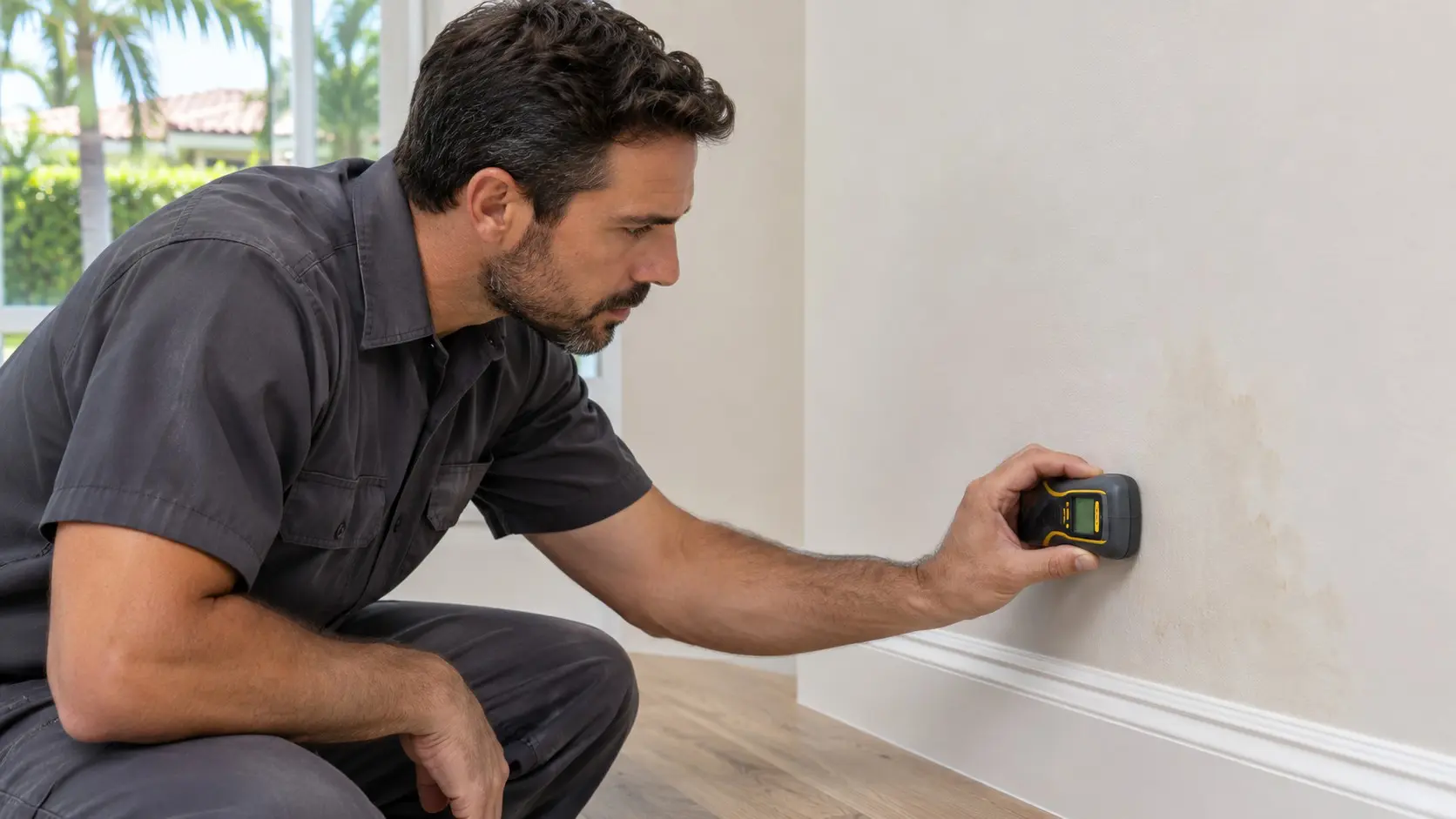
A moisture meter helps a plumber compare readings across drywall, trim, or flooring. By checking the affected area and a dry area made of the same material, the plumber can get a better sense of how far the moisture has spread. For example, a damp baseboard may be the most visible sign, while readings higher on the wall suggest water is traveling down from above.
Thermal Cameras Show Surface Temperature Patterns
A thermal camera uses infrared thermography to show temperature differences across a surface. A warm patch on tile can help guide an investigation of a hot water line, while a cooler area on drywall may warrant a moisture reading. Sunlight, air-conditioning, and normal hot water use can also affect surface temperatures, so the plumber checks the pattern against other findings.
Acoustic Equipment Helps Locate Pressurized Leaks
Water escaping from a pressurized pipe can create a sound or vibration. A plumber may use sensitive listening equipment at accessible points and compare what they hear across the suspected route. How well this works varies with the pipe material, the size of the leak, and background noise. Listening can be especially helpful when a supply line runs beneath tile or concrete and the pipe is out of sight.
Pressure Tests and Fixture Checks Narrow Down the Source
When the plumbing layout allows, a plumber can isolate a suspected supply line and monitor its pressure. A pressure drop gives the plumber a reason to investigate that section further. To check for a drain leak, the plumber may run water through one fixture at a time and watch for new moisture in the affected area. Testing fixtures individually helps distinguish, for example, a leak at a shower drain from one that occurs when water hits the enclosure.
Will the Plumber Need to Open the Wall or Floor?
The answer depends on where the leak is and how the pipe can be reached. A plumber may be able to inspect a connection through an existing access panel or reach it from the back of a closet. If the pipe runs under a slab, locating the affected line helps the plumber decide where access would make sense and whether rerouting is an option.
Before approving a repair, ask where the plumber found evidence of the leak, how they plan to reach it, and what will need to be restored afterward. If the moisture appears near the floor and the source is unclear, see our leak detection guide for Boca Raton homeowners.
What to Share When You Call a Plumber
Tell the plumber when you first noticed the stain, whether it changes after someone uses a fixture, and whether it has spread. Photos taken on different days can help show the pattern. If you’ve found damp drywall, lifting flooring, or a recurring water stain in your Palm Beach County home, Legacy Plumbing Experts can investigate the source and explain what access the repair may require.
Tags: