
Why Household Pipes Corrode and How to Make Them Last Longer
A blue-green stain below a copper fitting or a second pinhole leak within a year can tell you more about your plumbing than the age of the pipes alone. Corrosion can thin a metal pipe gradually or eat into one small area until water breaks through. Because much of a home’s plumbing sits behind walls or under floors, the first clue may be a stain, a change in water flow, or a leak that keeps coming back.
For homeowners in West Palm Beach and across Palm Beach County, the best way to prevent early pipe failure is to find out what’s damaging the pipe. Water chemistry, incompatible fittings, and moisture around the pipe call for different fixes.
What Causes Pipe Corrosion in Homes?
Water Chemistry and Pitting
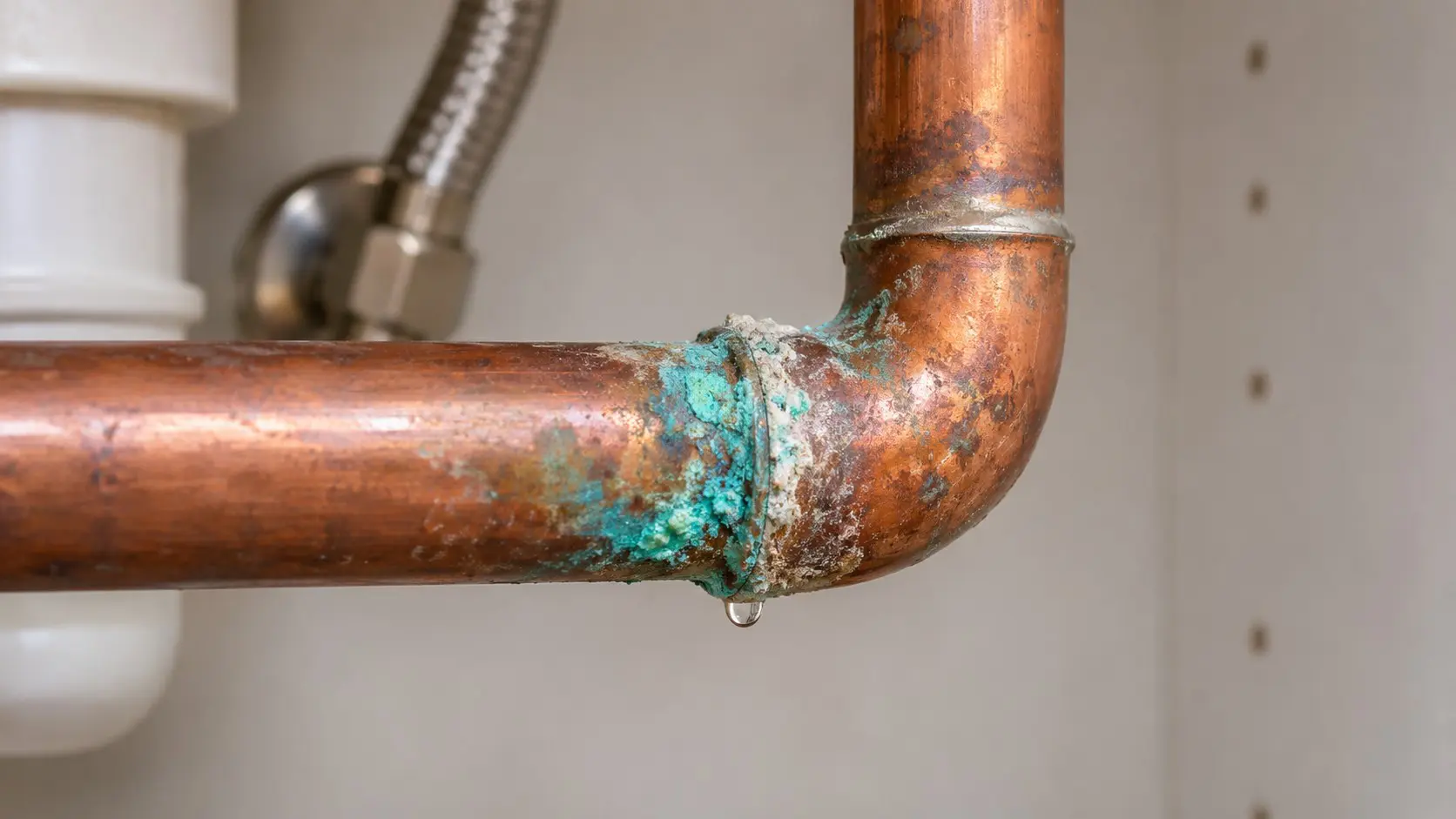
The chemistry of the water flowing through a pipe affects how the metal holds up. Acidity and other characteristics of the water can contribute to corrosion, depending on the pipe material and conditions. Copper can develop pitting, where corrosion eats into small areas of the pipe wall and eventually creates pinhole leaks. Blue-green stains on fixtures can also occur when copper corrodes.
If a copper line develops several pinhole leaks, a plumber can examine a removed section of pipe and advise whether water testing would help identify a contributing factor.
Incompatible Metal Connections
When certain dissimilar metals are in electrical contact and exposed to water, one metal can corrode faster. This process is called galvanic corrosion. It can become a concern where older galvanized steel plumbing meets newer copper after a partial repair or remodel.
If corrosion is concentrated around a connection between two different metals, ask a plumber to identify the materials and check whether the transition fitting is suitable for that connection.
Persistent Moisture Around the Pipe
Corrosion can also start on the outside of a metal pipe. Condensation on a cold water line, a slow drip from a nearby connection, or recurring dampness inside a cabinet can keep the pipe and its fittings wet. Check exposed plumbing under sinks, near the water heater, and in the garage. If one area stays damp, look above and around the pipe as well. Water dripping from a nearby connection can collect on a fitting farther down.
Early Warning Signs of Pipe Corrosion
Look for changes that persist or return after cleanup. These clues can help a plumber decide which sections to inspect first.
- Rust or blue-green buildup around fittings. Take a photo and check whether the area becomes damp again after you wipe it dry.
- Repeated pinhole leaks. Record where each leak happened. Several failures on the same branch can help show how much pipe may be affected.
- Gradually weaker flow at several fixtures. Internal buildup in older galvanized lines can restrict flow. Weak flow at a single faucet is a reason to check the aerator first.
- Damp flooring or unexplained wall stains. A hidden supply leak can show up away from the damaged pipe. Our guide to hidden water leak warning signs explains what else to look for.
How to Prevent Premature Pipe Failure
Fix Recurring Moisture and Check Past Repairs
Repair slow drips and ask about insulating cold water lines if condensation regularly leaves them wet. During a plumbing visit, point out any sections where newer pipe meets older metal piping. A plumber can check the fittings and look for deterioration around the connection. If you’re planning a remodel, have those transitions checked while the plumbing is accessible.
Test Before Choosing Water Treatment
If corrosion keeps recurring, ask whether a water test could help explain the pattern. The right test depends on your water source, pipe material, and what the plumber finds. Use those results to decide whether treatment is appropriate and what it needs to address.
Match the Repair to the Extent of the Damage
A single damaged fitting may need a localized repair. If leaks are appearing in several sections of the same piping, ask the plumber to compare spot repairs with replacing the affected branch. For more examples of when to schedule an inspection, see our guide to pipe repair warning signs in Lake Worth homes.
If you’ve noticed recurring leaks, deteriorating fittings, or weaker water flow in your Palm Beach County home, Legacy Plumbing Experts can inspect the affected plumbing and explain which repair options make sense for your pipes.
Tags: