
How to Tell if You Have a Slab Leak Beneath Your Home
A warm patch of tile that stays warm overnight or a water bill that jumps without a change in your routine could point to a hidden plumbing leak. In a home built on a concrete slab, some water supply pipes may run beneath the floor. When one of those pipes leaks, water can travel under the slab before you see damp flooring or other visible damage.
If you notice any of the following signs in your West Palm Beach or Palm Beach County home, start by checking for unused water flow. A plumber can then determine whether the leak is below the slab or elsewhere in the plumbing.
Four Slab Leak Warning Signs to Watch For
1. Your Water Usage Rises Without an Obvious Reason
Compare the gallons used on your recent bills, along with the number of days in each billing period. A spike can come from extra irrigation, a running toilet, or a hidden supply leak. If your routine stayed the same and the increase continues across billing periods, check your meter when everything that uses water is off.
2. One Area of the Floor Feels Unusually Warm
A hot water line under the slab can warm the floor above it if it leaks. Pay attention to a spot that stays warm when no one has used hot water for several hours, especially if it appears away from direct sunlight or heat-producing appliances. Note where the warmth starts and how far it spreads so you can describe it during the inspection.
3. Flooring Becomes Damp or Starts to Lift
Damp carpet, cupped wood, or lifting vinyl can indicate moisture beneath the finished floor. Check for nearby sources such as a leaking dishwasher, refrigerator supply line, or exterior door that lets rain in. Water can spread under flooring and show up several feet from its source, so the wettest spot may be some distance from the leaking pipe.
4. You Hear Water Running When Fixtures Are Off
A steady hiss or rushing sound near the floor or a wall can be a clue that water is moving through a supply pipe. First, listen near toilets and check whether an ice maker, water softener, or sprinkler system is running. If the sound persists after those sources stop, record where and when you hear it. See our guide to hidden water leak warning signs for other clues worth checking.
What to Do if You Suspect a Slab Leak
Check the Meter and Document What You See
Turn off faucets, pause irrigation, and make sure water-using appliances are idle. Photograph the meter reading, then check it again after a period when no one uses water. A change can indicate a leak somewhere on the metered system. Share both readings with your plumber, along with photos of any damp flooring and the date you first noticed the problem.
If water is actively spreading indoors and you can safely reach your home’s main water shutoff, close it and call a plumber promptly.
Arrange Leak Detection Before Opening the Floor
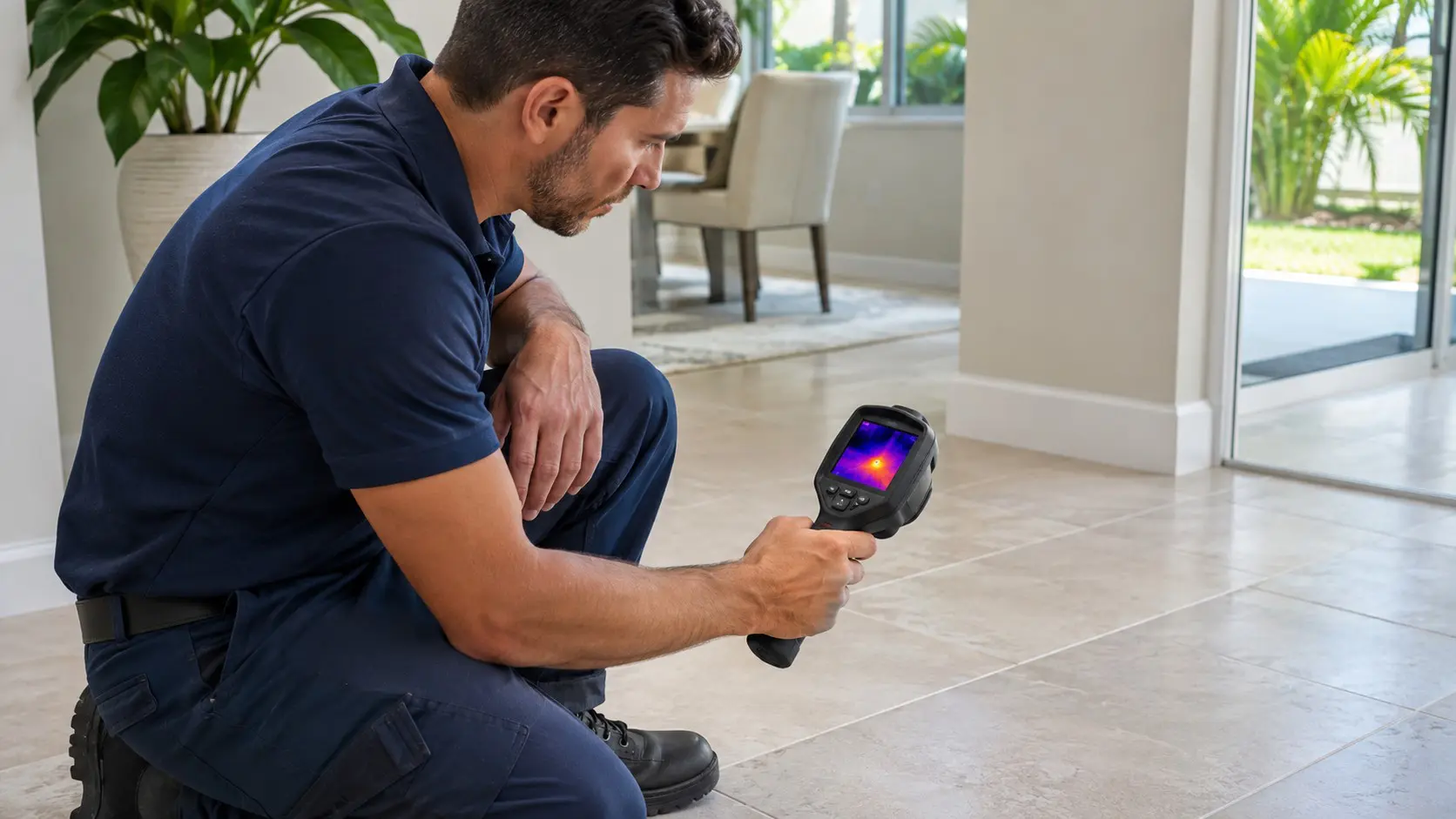
A plumber can isolate parts of the supply system and check which line is losing pressure. Depending on the pipe layout and what they find, they may use acoustic equipment to listen for escaping water or thermal imaging to identify an area worth investigating on a suspected hot water line. Our guide to leak detection for Boca Raton homeowners covers more signs to look for around the house.
How Plumbers Repair a Slab Leak
Once the location is confirmed, the plumber may recommend opening a small area of the slab to repair a specific section of pipe. If the damaged line is difficult to reach, rerouting it through an accessible wall or ceiling may reduce the need to cut through finished flooring. If the home has had several supply leaks, ask whether the condition of the remaining pipes warrants a broader repiping estimate.
Before approving the work, ask how the plumber confirmed the location, what surfaces they need to open, and who will handle flooring or drywall restoration afterward. For an unexplained warm spot, persistent meter movement, or damp flooring in your Palm Beach County home, contact Legacy Plumbing Experts to schedule leak detection and review the repair options.
Tags: