
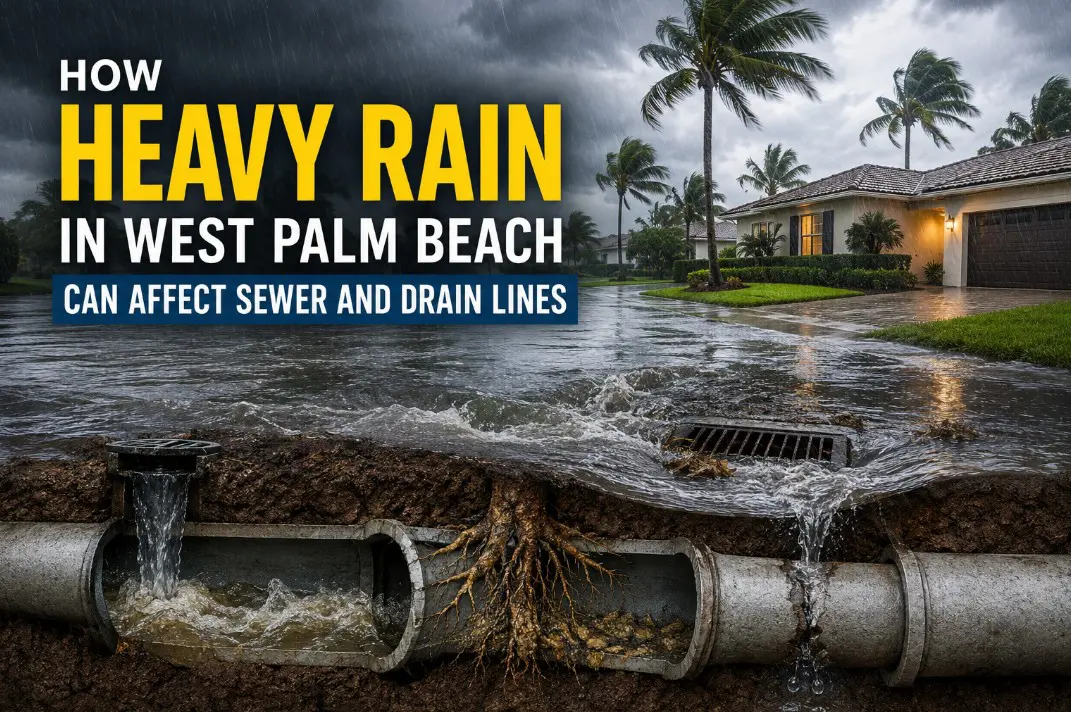
How Heavy Rain in West Palm Beach Can Affect Sewer and Drain Lines
Heavy rain is a normal part of life in South Florida, but intense or prolonged rainfall can create unexpected problems for residential plumbing systems. West Palm Beach and the surrounding Palm Beach County area are particularly susceptible to localized flooding because of their relatively flat, low-lying terrain and frequent intense rain events.
For homeowners, heavy rainfall can mean more than standing water in streets and yards. Saturated ground, overloaded drainage infrastructure, debris, and groundwater entering damaged pipes can contribute to slow drains, sewer backups, and other plumbing problems.
Understanding how heavy rain affects sewer and drain lines can help West Palm Beach homeowners recognize warning signs before a small drainage problem becomes a major plumbing emergency.
Heavy Rain Can Put Extra Pressure on Drainage Systems
West Palm Beach uses separate systems for stormwater and sanitary wastewater. The city’s stormwater system collects rainfall runoff, while sanitary sewer pipes transport wastewater from homes and businesses.
Even though these systems are separate, periods of intense rainfall can still create challenging conditions underground and around residential properties.
Palm Beach County notes that intense localized rainfall can exceed drainage capacity, while saturated ground and flat terrain can make it more difficult for excess water to drain quickly.
When drainage around a property is already struggling, an existing household plumbing problem may become much more noticeable.
Homeowners who experience slow drains or recurring backups after storms may benefit from professional Drain Cleaning in West Palm Beach to determine whether accumulated debris or another obstruction is restricting wastewater flow.
Groundwater Can Enter Damaged Sewer Lines
Heavy rainfall does not necessarily have to enter a home’s drain directly to cause problems.
During prolonged rain, the soil surrounding underground pipes can become saturated. If sewer lines contain cracks, deteriorated joints, or other defects, groundwater may infiltrate the system.
The U.S. Environmental Protection Agency identifies sewer defects that allow stormwater and groundwater infiltration as one potential contributor to sanitary sewer overflows. Florida environmental guidance similarly notes that damaged collection systems can become susceptible to rainfall infiltration and may have difficulty handling the additional volume.
For homeowners, an older or damaged sewer line may therefore become more problematic during periods of heavy rainfall.
Existing Drain Clogs Can Become Worse During Storms
A partially blocked drain may continue functioning during normal household use. Heavy rainfall and saturated conditions, however, can expose weaknesses that were already developing within the drainage system. Grease, hair, soap residue, food particles, wipes, sediment, and other debris can gradually reduce the usable space inside a pipe. When wastewater encounters an already restricted line, drainage may become slower or stop completely.
The City of West Palm Beach specifically warns residents that wipes can clog and damage wastewater systems and recommends flushing only appropriate materials. If a drain frequently becomes slow before or after major rain events, the rainfall may not be the original cause. Instead, it may be making an existing restriction more obvious.
Saturated Soil Can Affect Underground Pipes
Heavy rainfall changes conditions around underground plumbing.
As soil absorbs large amounts of water, it becomes heavier and softer. Older, weakened, or improperly supported pipes may already have structural problems that become more noticeable under changing ground conditions.
Cracks, separated joints, corrosion, and other defects can create areas where groundwater enters the pipe or where debris becomes trapped.
Once the interior surface of a drain or sewer line is damaged, waste can repeatedly collect around the affected section.
If structural damage is contributing to recurring plumbing problems, professional Drain Repair in West Palm Beach can help address the underlying pipe issue rather than repeatedly treating the resulting blockage.
Debris Can Overwhelm Storm Drains During Heavy Rain
Leaves, grass clippings, dirt, trash, and other debris can also make local flooding worse by blocking stormwater infrastructure.
The City of West Palm Beach advises residents to keep storm drain grates, gutters, inlets, catch basins, and swales clear because blocked drainage systems can prevent heavy rainfall from draining properly and contribute to water backing up around properties.
This distinction is important for homeowners. A flooded yard or street does not automatically mean there is a problem with the home’s sanitary sewer line.
However, if indoor plumbing symptoms appear at the same time—such as multiple slow drains, toilets gurgling, or wastewater backing up into fixtures—the household drainage system should be investigated.
Heavy Rain Can Reveal Hidden Sewer Line Damage
One reason plumbing problems sometimes appear immediately after a major storm is that rainfall can reveal defects that were already present.
A small underground crack may cause few noticeable symptoms during dry weather. After prolonged rainfall saturates the surrounding ground, however, groundwater may enter through the damaged section.
Similarly, tree roots may already be growing through a weak pipe joint. Debris can accumulate around those roots and gradually reduce wastewater flow.
Because these problems are underground, homeowners cannot determine the cause simply by looking at a sink or toilet.
A professional Camera Inspection in West Palm Beach can help identify cracks, root intrusion, heavy buildup, displaced sections, and other problems inside a drain or sewer line without relying only on surface symptoms.
Warning Signs to Watch for After Heavy Rain
Not every slow drain after a storm indicates a serious sewer problem. However, certain symptoms deserve attention, especially when they appear repeatedly after periods of heavy rainfall.
Multiple fixtures draining slowly at the same time can indicate a restriction deeper in the system. Toilets may bubble or gurgle, and water may appear in a shower or bathtub when another fixture is used.
Homeowners should also pay attention to persistent sewage odors, unusual sounds from drains, wastewater appearing around lower-level fixtures, or recurring backups following storms.
If several plumbing fixtures are affected simultaneously, the problem is more likely to involve a larger drain or sewer line rather than an isolated sink or shower clog.
What West Palm Beach Homeowners Can Do Before Heavy Rain
Preventive maintenance can reduce the likelihood that an existing plumbing issue becomes worse during South Florida’s rainy periods.
Avoid pouring fats, oils, and grease into kitchen drains. Florida environmental guidance notes that these materials can stick to pipe interiors, contribute to blockages, and reduce sewer-system effectiveness.
Homeowners should also avoid flushing wipes and other materials that do not break down easily.
Outdoor drainage areas should be kept free from leaves, grass clippings, trash, and other debris so stormwater can move efficiently away from the property.
Most importantly, recurring slow drains should be investigated before severe weather arrives. A plumbing system that already struggles during normal conditions may be more likely to experience problems when the surrounding ground becomes saturated.
Protecting Your Sewer and Drain Lines During West Palm Beach’s Rainy Season
Heavy rainfall itself does not automatically damage every residential sewer or drain line. However, it can expose existing weaknesses, contribute to groundwater infiltration through damaged pipes, overwhelm exterior drainage, and make existing blockages more noticeable.
West Palm Beach homeowners should pay particular attention when plumbing problems consistently appear during or immediately after heavy rainfall.
Legacy Plumbing Experts provides professional drain and plumbing services throughout West Palm Beach. Identifying whether the problem involves buildup, damaged piping, root intrusion, or another underground obstruction can help determine the appropriate solution.
Addressing these issues early can help reduce the risk of unexpected backups and keep the home’s drainage system functioning properly during South Florida’s heavy rain events.
Tags: