
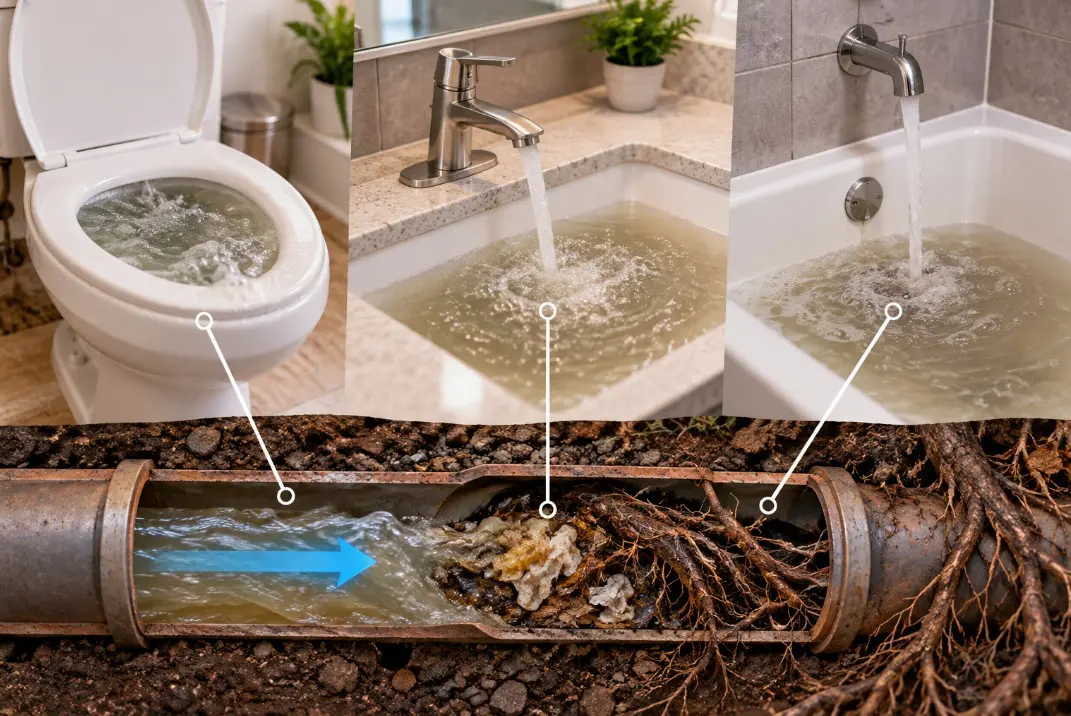
Why Are Multiple Drains Backing Up in Your Home?
When one sink or shower drains slowly, the problem may be limited to that particular fixture. However, when multiple drains back up at the same time, it often indicates a more serious issue somewhere within your home’s drainage system.
Imagine flushing a toilet and noticing water rising in the bathtub, or running your washing machine and seeing wastewater appear in a nearby shower. These situations are inconvenient and may indicate that wastewater cannot move freely through the connected drainage pipes.
For homeowners in West Palm Beach and surrounding Florida communities, understanding the causes of simultaneous drain backups can help prevent property damage and expensive plumbing repairs.
Although a clogged main sewer line is a common explanation, several other plumbing conditions can produce similar symptoms. Identifying the underlying cause is essential before attempting repairs.
Common Causes of Multiple Drains Backing Up Simultaneously
When several plumbing fixtures experience drainage problems together, the issue frequently involves a shared drainpipe or the main sewer line.
Here are some of the most common causes homeowners should understand.
1. Blockage in the main sewer line
Your home’s main sewer line carries wastewater from toilets, sinks, showers, and other fixtures toward the municipal sewer system or private septic system.
When this pipe becomes obstructed, wastewater may back up through lower-level fixtures instead of flowing away normally.
Grease, debris, accumulated waste, and foreign objects can contribute to these blockages.
2. Tree root intrusion
Tree roots naturally grow toward moisture sources. If an underground sewer pipe develops cracks or loose joints, roots may enter and expand inside the pipe.
Over time, root growth can restrict wastewater flow and create recurring blockages.
3. Grease and debris accumulation
Cooking grease, food particles, soap residue, and other materials can gradually accumulate within drainage pipes.
Although buildup may initially affect individual fixtures, an obstruction in a shared drain can eventually impact multiple plumbing connections.
4. Damaged or collapsed sewer pipes
Older sewer lines may deteriorate because of corrosion, ground movement, or structural damage.
A cracked, misaligned, or collapsed pipe can prevent wastewater from flowing properly, causing repeated backups throughout the home.
5. Heavy rainfall and sewer system problems
During intense rainfall, some municipal sewer systems can become overwhelmed, particularly where stormwater enters sanitary sewer infrastructure.
In certain circumstances, this can contribute to wastewater backups in connected properties.
Homeowners experiencing repeated problems may benefit from professional Drain Cleaning Services in West Palm Beach to identify and address drainage obstructions.
How to Identify and Prevent Multiple Drain Backups
Recognizing the warning signs of a shared drainage problem can help homeowners respond before wastewater causes extensive damage.
Common symptoms include:
- Water backing up into a bathtub when a toilet is flushed.
- Gurgling noises coming from multiple drains.
- Several sinks or showers draining unusually slowly.
- Sewage odors near floor drains or plumbing fixtures.
- Wastewater appearing in lower-level fixtures.
- Recurring clogs affecting different areas of the house.
These symptoms do not always confirm a main sewer blockage. A professional plumber may need to inspect the drainage system to determine the actual cause.
For additional background on how wastewater travels through connected infrastructure, homeowners can explore Wikipedia’s explanation of sanitary sewer systems.
Preventing future backups begins with responsible plumbing habits. Avoid pouring grease into sinks, flushing wipes or hygiene products, and allowing excessive debris to enter household drains.
Routine plumbing inspections can also help identify deteriorating pipes or developing obstructions before they cause serious problems.
What Should You Do When Several Drains Back Up at Once?
If multiple drains begin backing up simultaneously, stop using water throughout the home until the situation is assessed.
Continuing to flush toilets, run washing machines, or use sinks may introduce additional wastewater into an already restricted drainage system.
Avoid using chemical drain cleaners, especially when the blockage location is unknown. These products may not resolve deeper sewer line problems and can introduce additional hazards.
Instead, contact a qualified plumber who can evaluate the drainage system using appropriate diagnostic equipment.
Depending on the findings, professional solutions may include mechanical drain cleaning, sewer camera inspections, hydro jetting, or pipe repairs.
For damaged underground pipes, homeowners may need specialized Sewer Line Repair and Replacement Services to restore reliable wastewater flow.
Protect Your Home with Legacy Plumbing Experts
Multiple drains backing up simultaneously should never be ignored. Whether the cause involves tree roots, accumulated debris, or damaged sewer pipes, timely professional attention can reduce the risk of wastewater damage and recurring plumbing emergencies.
Legacy Plumbing Experts provides professional plumbing and drain services for homeowners throughout West Palm Beach and surrounding communities.
If your sinks, toilets, or showers are experiencing simultaneous backups, contact Legacy Plumbing Experts to schedule a professional plumbing assessment and determine the appropriate solution.
Tags: