
Why Is Water Pressure Low Throughout Your Entire House?
Low water pressure can make everyday activities such as showering, washing dishes, and doing laundry frustrating. When water flows weakly from just one faucet, the problem may involve that particular fixture. However, when low water pressure affects multiple sinks, showers, and appliances throughout the house, it often indicates a broader plumbing or water supply issue.
For homeowners in West Palm Beach and surrounding Florida communities, identifying the cause of low water pressure is important for maintaining a reliable household plumbing system.
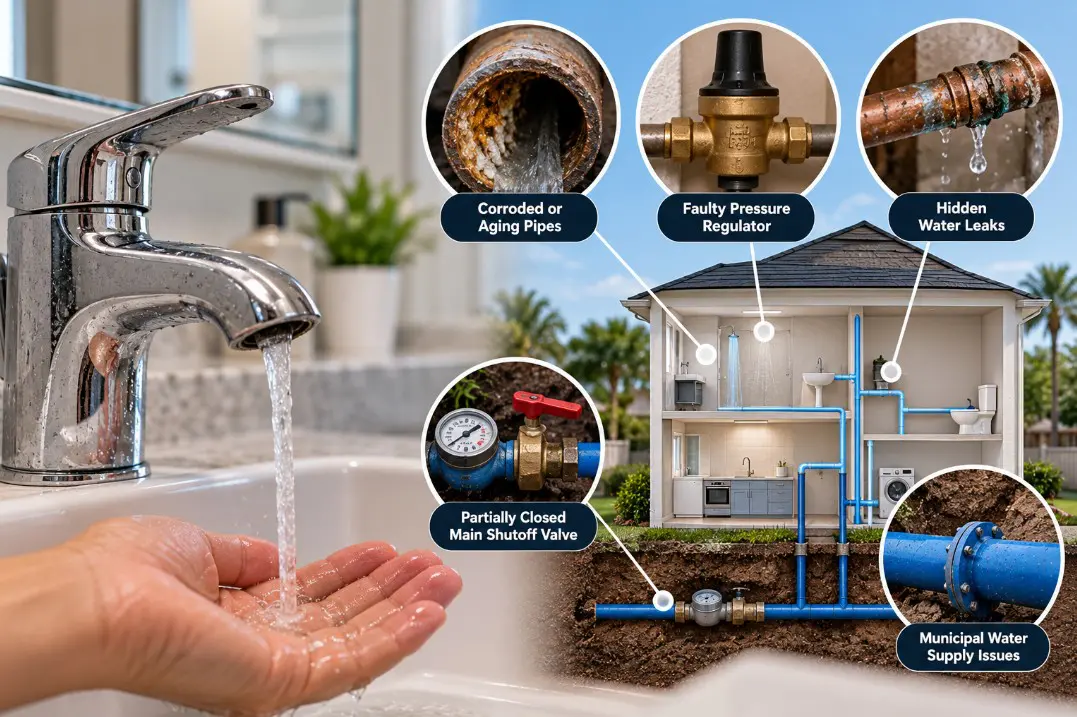
Several conditions can affect water pressure, including hidden leaks, aging pipes, malfunctioning pressure regulators, and problems with the municipal water supply.
Some issues are relatively simple to resolve, while others require professional plumbing inspections and repairs.
Understanding the possible causes can help homeowners recognize warning signs, avoid unnecessary repairs, and restore consistent water flow.
Common Causes of Low Water Pressure Throughout the House
When multiple fixtures experience reduced water pressure, the problem may originate somewhere along the main water supply system.
1. Partially closed main water shutoff valve
Your home’s main shutoff valve controls water entering the plumbing system.
If the valve is not fully open, it may restrict water flow to multiple fixtures. This can happen after plumbing repairs or maintenance when a valve is accidentally left partially closed.
2. Hidden plumbing leaks
Leaks inside walls, beneath floors, or along underground water lines can reduce the water available to household fixtures.
Homeowners may also notice unexplained increases in water bills, damp areas, or water meter activity when no fixtures are running.
Professional Leak Detection Services in West Palm Beach can help locate concealed leaks and identify appropriate repairs.
3. Corroded or aging water pipes
Older plumbing systems may develop internal corrosion or mineral deposits that restrict water movement.
As pipe interiors become narrower, water flow can decrease, particularly when several fixtures are used simultaneously.
4. Faulty pressure-reducing valve
Some homes have a pressure-reducing valve that regulates incoming water pressure.
If this component malfunctions, household pressure may become unusually low, excessively high, or inconsistent.
A plumber can test the system and determine whether adjustment or replacement is necessary.
5. Municipal water supply problems
Low pressure does not always originate inside your home.
Water main repairs, nearby construction, temporary supply interruptions, or unusually high neighborhood demand can affect incoming water pressure.
If neighboring properties experience similar problems, contacting the local water utility may help identify the cause.
6. Water filtration or treatment restrictions
Whole-house filtration systems and water treatment equipment can restrict water flow when filters become clogged or components malfunction.
Checking the manufacturer’s recommended maintenance schedule can help identify potential problems.
How to Diagnose and Fix Low Water Pressure at Home
Before scheduling major plumbing repairs, homeowners can perform several basic checks to better understand the problem.
Start by testing different faucets and showers throughout the property.
If only one fixture has weak flow, the issue may involve a clogged aerator, showerhead, or local supply connection.
If every fixture is affected, investigate the main water supply.
Consider these practical steps:
- Check the main shutoff valve: Confirm that it is fully open, following the valve manufacturer’s operating instructions.
- Compare hot and cold water: If only hot water is affected, the issue may involve the water heater or hot-water distribution pipes.
- Inspect visible plumbing: Look for moisture, corrosion, or signs of leakage.
- Check water filters: Replace clogged whole-house filters according to manufacturer recommendations.
- Contact your water utility: Ask whether nearby maintenance or supply problems could be affecting pressure.
- Measure water pressure: A suitable pressure gauge can help identify unusually low incoming pressure.
Homeowners should avoid adjusting pressure regulators without understanding the system’s specifications. Excessive pressure can damage plumbing fixtures and connections.
For general background on household water distribution, Wikipedia explains how water supply networks deliver water through interconnected pipes and infrastructure.
When Should You Call a Professional Plumber for Low Water Pressure?
Some pressure problems can be resolved through basic maintenance. However, persistent low pressure throughout the house may require professional diagnosis.
Contact a qualified plumber if you notice:
- Sudden pressure loss affecting multiple fixtures.
- Low pressure accompanied by unexplained water bills.
- Damp walls, ceilings, or flooring.
- Repeated pressure fluctuations.
- Discolored water or signs of pipe corrosion.
- Reduced water flow that continues after basic checks.
A plumber can evaluate incoming pressure, inspect supply lines, test pressure-regulating equipment, and identify hidden restrictions or leaks.
Depending on the findings, repairs may involve replacing damaged valves, fixing leaks, clearing suitable obstructions, or upgrading deteriorated plumbing.
For homes with extensively damaged or aging pipes, professional Repiping Services in West Palm Beach may provide a longer-term solution when pipe replacement is justified.
Restore Reliable Water Flow with Legacy Plumbing Experts
Low water pressure throughout the house can indicate anything from a partially closed valve to a significant water supply problem.
Identifying the actual cause is essential before investing in repairs or replacing plumbing components.
Legacy Plumbing Experts provides professional plumbing inspections, leak detection, water line services, and repiping solutions throughout West Palm Beach and surrounding Florida communities.
If your household is experiencing persistent low water pressure, contact Legacy Plumbing Experts to schedule a professional assessment and determine the most appropriate solution.
Tags: