
A Pipe Burst Inside Your Home? Here’s What to Do First
If a pipe bursts inside your home, shut off the main water supply if you can reach it safely, then call an emergency plumber. If water has reached outlets, appliances, or the electrical panel, stay out of the affected area. Keep everyone away from standing water that may be energized.
You may first notice a burst pipe when water runs out from under a cabinet, spreads across the floor, or drips from the ceiling. You can take the first steps before you know exactly where the pipe broke. Once the water is off and the area is safe, you can document the damage and start preparing for repairs.
1. Shut Off the Main Water Supply
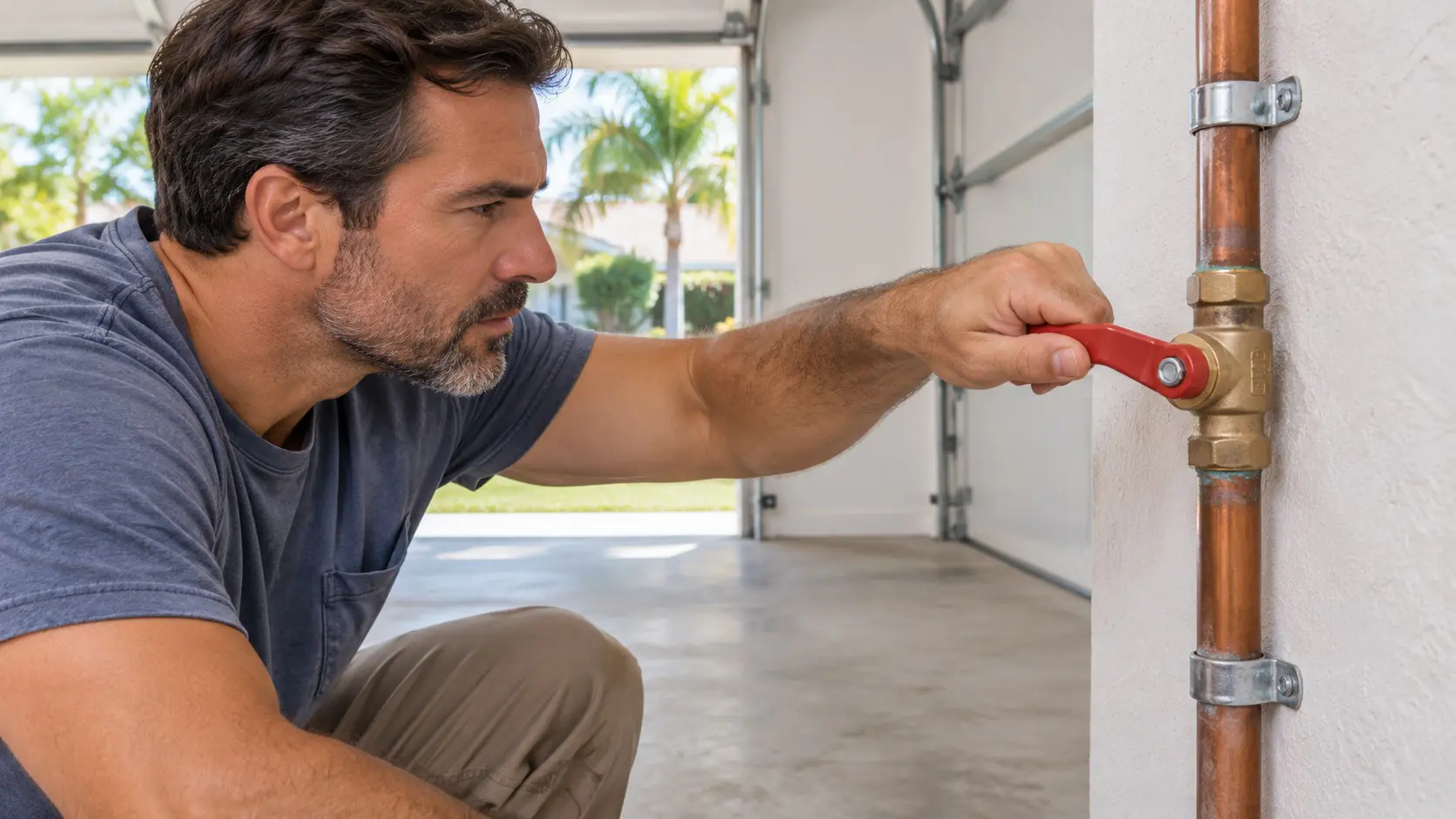
Look for the homeowner’s main shutoff where the water supply line enters the house. Depending on the layout, it may be on an exterior wall, in the garage, or in a utility area. If the leak is clearly coming from an appliance or fixture with its own accessible shutoff, closing that valve may stop it. Use the main shutoff if you’re unsure which line failed.
A lever-style ball valve usually closes with a quarter turn, leaving the handle perpendicular to the pipe. A round-handled gate valve typically closes by turning it clockwise. If the valve is stuck or you can’t find it, call your plumber or water utility for help getting the supply shut off.
Keep the supply off until the plumber says it’s safe to restore it. Some water can still escape from the broken line after you close the valve. Tell the plumber if the flow stays steady or continues spreading.
2. Keep Clear of Electrical Hazards and Sagging Ceilings
If water is near electrical equipment, avoid touching switches, outlets, cords, or appliances in the affected area. If reaching the electrical panel would mean crossing standing water, leave the area and call for professional help. If you see sparks or smoke, get everyone out and call 911 from a safe location.
If water is dripping from a ceiling and the drywall begins to bulge or sag, keep people and pets out of the room. Tell the plumber where the water appeared and what rooms or fixtures are directly above it.
3. Call a Plumber and Describe What Happened
When you call, explain where you first saw water, whether the main shutoff worked, and whether the flow slowed after you closed it. Mention any recent leaks, repairs, or changes in water flow. Those details can help the plumber decide where to start, especially if the pipe is behind a finished wall or ceiling. Our guide to hidden water leak warning signs explains how leaks can show up away from the damaged pipe.
4. Document the Damage and Start Drying Safe Areas
Once the area is safe to enter, take photos of affected flooring, walls, and belongings. Move dry items out of the way and blot up small amounts of clean water with towels. If you plan to file an insurance claim, contact your insurer and keep receipts for emergency plumbing and cleanup.
Water can remain beneath flooring or behind baseboards after the surface looks dry. If water reached several rooms or soaked drywall, flooring, or cabinets, ask a water damage restoration professional to check how far it spread and what needs to be dried or removed.
5. Find Out Why the Pipe Failed
Once the plumber exposes the damaged section, ask what appears to have caused the break and whether nearby sections show similar wear. A failed fitting may need a spot repair. Widespread corrosion or several leaks on the same branch may make replacing a longer section worth considering. For examples of signs that warrant a closer look, read our guide to pipe repair warning signs in Lake Worth homes.
After the repair, ask the plumber to show you where the main shutoff is and how to close it. If a pipe bursts in your West Palm Beach or Palm Beach County home, call Legacy Plumbing Experts to locate the break and discuss the repair.
Tags: